
Do you often feel sad even when everything in your life is going right? Or do you usually feel panicked over situations you know you cannot control?
If yes, you might be experiencing depression or anxiety.
Anxiety and depression are two of the most common mental health disorders that severely affect mood. While both conditions are different, they can commonly occur together. Depression makes one feel sad, low, and unmotivated. Whereas anxiety creates feelings of nervousness, worry, or dread.
However, it’s completely normal to have feelings of anxiety or depression from time to time. As both are closely related, it can be tricky to tell whether you have depression or anxiety.
But if these feelings happen often and interfere with your life, you may get help from a mental health professional. These are highly treatable with the right combination of medications and therapies.
What is Depression?
Depression is one of the most common mental health disorders that affects millions of people around the world. It can also be known by the name major depressive disorder or clinical depression.
Depression negatively influences how you feel, think, and act. It is characterized by a low mood, constant feelings of sadness, and loss of interest in activities. Depression severely interferes with daily life, which can result in feelings of hopelessness and worthlessness. Approximately 16% of U.S. adults, about 1 in 6 people, will experience depression at some point in their lives. Women are more likely to experience depression than men. It usually occurs because of genetics, low self-esteem, environmental factors, or certain changes in brain chemicals.
Therefore, it severely affects the part of the brain, the amygdala, prefrontal cortex, and hippocampus, which go into overdrive when someone is depressed. People who are clinically depressed have extreme sadness or apathy that lasts for several days, weeks, or even months on end. Their feelings will be persistent through the day, and will occur more days than not.
The parts of our brain that get stuck in thought patterns like rumination,
self-criticism, and hopelessness also become overactive.
—Dr. Eller
Moreover, depression also leads to dysregulation of serotonin and a decrease in norepinephrine. These are the neurotransmitters that help with cognitive function and affect the mood.
Types of Depression
There are different forms and types of depression-related conditions. Some common types of depression include:
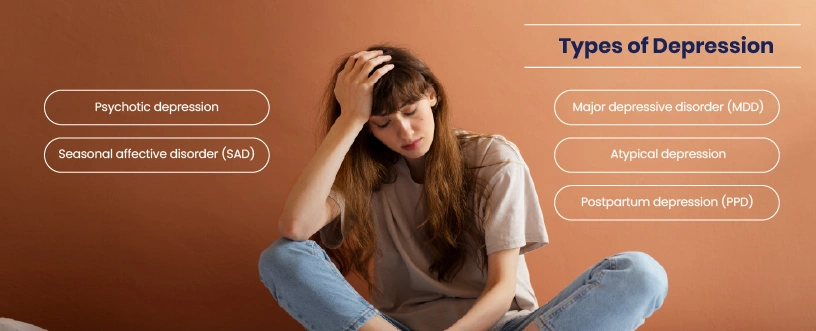
- Major depressive disorder (MDD)
- Atypical depression
- Postnatal depression (PND) or postpartum depression (PPD)
- Psychotic depression
- Seasonal affective disorder (SAD)
What is Anxiety?
Anxiety is a natural stress response and is a part of our evolutionary process. Our brains are designed to feel worried or nervous when we face danger. Anxiety can trigger the fight-or-flight response when we witness a threat, which results in destructive physical, psychological, and social consequences. People experiencing anxiety feel nervous, worried, and afraid, or even experience physical symptoms.
Anyone can experience anxiety; it can be before an exam, a meeting, a stage performance, or going to a new place. However, if these feelings don’t go away and interfere with everyday life, then it’s a sign of an anxiety disorder.
As per the research by the National Institute of Medicine, anxiety affects approximately 30% of adults at some time in their lives, and women are twice as likely to have an anxiety disorder as men. It is because brain chemistry and the fight-or-flight response are being triggered more readily in women.
“Anxiety is basically the fear or threat detection center running wild,”
—Maryellen Eller, MD
It occurs because of differences in brain chemicals, such as the amygdala, the part of the brain that sounds the alarm when there is danger. The amygdala communicates fear to the prefrontal cortex, the decision maker in the brain. Anxiety affects all areas of their life, including social situations, work, and school.
Types of Anxiety
There are different types of anxiety, and each type has its own symptoms.
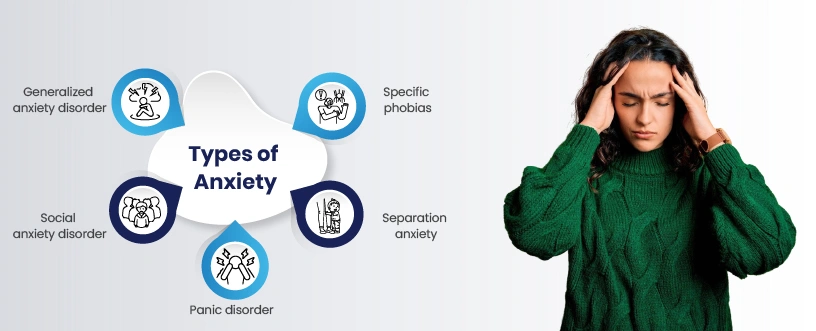
- Generalized anxiety disorder
- Social anxiety disorder
- Panic disorder
- Separation anxiety
- Specific phobias
What is the Difference between Anxiety and Depression?
Anxiety and depression are two different disorders. The main difference lies in the symptoms. Depression is a constant feeling of sadness and hopelessness. It makes one lose interest in activities they once treasured. However, depression also makes some people think about suicide. On the other hand, anxiety involves intense fear or worry that you can’t control. The excessive worry can occur anytime and interfere with everyday activities. So, the main difference is that with depression, one may feel low, and with anxiety, one may feel restlessness. These two conditions can occur together and impact the thinking pattern, as they severely affect the brain.
| Anxiety | Depression |
| People with anxiety are nervous, restless, and irritable | Individuals with depression are sad, hopeless, and unmotivated |
| It affects the parts of the brain, like the prefrontal cortex, which causes difficulty in turning off the anxious thoughts | Affects the part of the brain, the prefrontal cortex, which leads to issues with decision-making |
| Trouble sleeping | It causes difficulty in getting you out of bed, as it leads to too much sleeping or makes you unable to sleep |
| Persistent fear | It causes hopelessness |
Anxiety Vs Depression: Differences in Symptoms
Anxiety and depression can occur together; around 60% of people with anxiety also have symptoms of depression. As per the research by the National Institute of Medicine, avoiding the things you fear might lead to depression, which can make the condition worse or last longer. The same factors that can trigger anxiety can also contribute to the risk factors of developing depression.
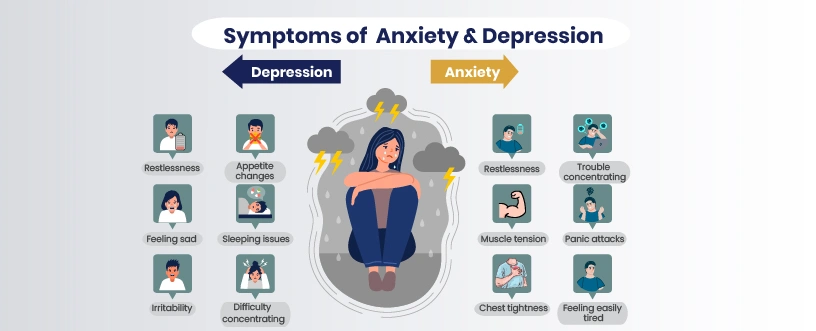
If you’re wondering what the difference is between anxiety and depression, looking at the signs and symptoms of each can help. First, let’s start with the signs and symptoms of anxiety.
Symptoms of Anxiety
- Restlessness
- Trouble concentrating
- Nausea
- Panic attacks
- Isolating yourself from others
- Exhaustion
- Sweating
- Anxiety chest pain
- Obsessive thought patterns
- Muscle tension
- Chest tightness
- Feeling easily tired
- Heart palpitations
- Shortness of breath
- Avoidance of triggers
- Reassurance seeking.
Symptoms of Depression
Some of the major depression symptoms and signs may include:
- Feeling sad, hopeless, and anxious more often
- Crying without any reason
- Irritability
- Restlessness
- Sleeping issues, including sleeping too much or not enough, or having a hard time falling or staying asleep
- Having unexplained pains, headaches, or stomach pains for no apparent reason
- Fatigue even after sleeping
- Loss of interest in things you once enjoyed
- Appetite changes
- neglect of personal hygiene
- Difficulty concentrating
- Finding it extremely difficult to make decisions
- Feelings of guilt or worthlessness
- Having thoughts of self-harm or suicide
Can Anxiety and Depression Co-exist?
Yes, anxiety and depression can occur together. In fact, approximately most of the people with depression also experience anxiety. Also, people who are diagnosed with anxiety are also likely to have depression, too. It happens because anxiety can put you at risk for getting depression, as the symptoms of irritability, isolation, and restlessness can turn into feelings of sadness, hopelessness, and loss of interest.
“It’s almost like we’re trying to figure out the mystery of the chicken and the egg; the question is, which thing appears first? In the same way, researchers consider the concepts of anxiety and depression. For example, feeling depressed can cause us to worry, and worrying can cause us to become depressed. So, people with anxiety are not able to leave the house, which can lead them to feel isolated or alone, which can loop into depression. In the same way, if a person is experiencing depression, they may start to feel anxiety about the work or chores they aren’t accomplishing.
So, indeed, both conditions can coexist. In fact, in many cases, one may have caused the other.
Get Solution to Anxiety and Depression
Anxiety and depression can feel similar but require different approaches to treatment. Our team provides personalized care to help you understand your symptoms and find effective support.
✓ Treatment for Anxiety & Depression
✓ Therapy & Medication Management
✓ Telehealth & In-Person Appointments
✓ Most major insurances accepted
Expert consultation available · Flexible scheduling · Confidential care
Note: Severe depression can also create a sense of distress about losing control of oneself, which eventually leads to suicide and self-harming activities. If you feel like your condition is getting out of control and cannot be managed, seek professional help immediately.
What are the Causes of Anxiety and Depression?
The exact cause of depression and anxiety is still unknown. But there are some factors that may increase the risks of developing these conditions.
Some of them are as follows:
1. Genetics
Genetics plays a major role in the development of mental health conditions. As most of the disorders run in families. Children whose parents struggle with anxiety and depression are more likely to experience these disorders.
2. Chronic Stress
Long-lasting psychological stress keeps the body’s stress system active, which causes high levels of cortisol in the brain. Research by McEwen and Morrison found that higher cortisol levels for a long time change the structure of the prefrontal cortex. It reduces connections between brain cells and damages circuits that support attention and cognitive control, which eventually leads to the development of depression and anxiety.
3. Environmental Factors
Experiencing traumatic events, such as physical or sexual abuse, the death of a loved one, or financial problems. All these factors make one more vulnerable to developing anxiety and depression.
4. Prone to Substances
Individuals who take substances excessively, such as alcohol, cocaine, and marijuana, marijuna are more prone to develop mental health conditions. It is because
However, every individual is different, but all these factors may increase a person’s chances of developing anxiety and depression.
How Can Anxiety & Depression Be Diagnosed?
The diagnostic criteria for anxiety and depression are the same. Only a mental health professional can diagnose the condition by looking at the symptoms. The mental health professionals use the Diagnostic and Statistical Manual of Mental Disorders, Fifth Edition (DSM-5). The diagnosis requires time as the psychiatrists look at the symptoms and can verify the condition. They meet the family members of the patient to know the medical and family history.
The anxiety symptoms are likely to be present for several months, and depressive symptoms generally must exist for at least several weeks. Additionally, symptoms must be interfering with your daily life and your ability to function.
What are the Treatment Options for Anxiety and Depression?
Anxiety and depression are highly curable conditions with the right combination of medications and therapies. A mental health professional diagnoses the root cause and then develops treatments as per the severity of the condition. Some of the common modes of treatment are as follows.
Talk Therapy
Talk therapy, also known as psychotherapy, involves talking about the thoughts and feelings of a patient in a safe environment with a licensed mental health professional. A mental health professional then develops a customized treatment plan to treat your anxiety, depression, or both. Talk therapy can happen in an individualized or a group setting. Different types of therapy that can help treat anxiety and depression include:
1. Cognitive behavioral therapy (CBT)
CBT is an evidence-based therapy that focuses on helping a patient change their thoughts and beliefs while addressing past experiences. It helps people who are struggling with anxiety or depression. CBT works by intervening in the past experiences that may have contributed to their anxiety and depression. It is one of the most efficient methods of treating anxiety and depressive disorders. It even facilitates dealing with mild episodes to prevent their further escalation.
2. Acceptance and Commitment Therapy (ACT)
ACT is also a form of CBT. This therapy involves the acceptance of thoughts or images and helps reduce the symptoms of anxiety. It works on the principle that thoughts themselves are not bad or problematic. Moreover, according to ACT, the more we struggle against those unwanted thoughts, the more we find ourselves trapped in them. Therefore, through ACT, people find ways to see their thoughts as they are.
3. Interpersonal Therapy (IPT)
IPT is really effective for treating depression. Through this therapy, people are able to focus on improving relationships, resolving conflicts, and managing grief or major life transitions.
4. Dialectical Behavior Therapy (DBT)
DBT is helpful for managing intense emotions as it teaches skills to regulate emotions. It’s really effective for anxiety and depression. In this therapy, it means that you can accept your thoughts and emotions and still move on from them by changing them into productive thoughts and emotions. DBT helps in tolerating distress and improves mindfulness.
Medications
Medications also provide lasting relief with the combination of therapies. Some of the common medications include antidepressants, antianxiety, and antipsychotics.
Note: It’s important to consult with your mental health provider when seeking medication for depression and anxiety. Not all prescribed medications are effective for every individual, and it’s important to ensure the medication and dosage are working for you.
How Orange Coast Psychiatry Can Help You Heal?
If you or a loved one is struggling with depression or anxiety, don’t worry! Help is within reach!
At Orange Coast Psychiatry, we have an expert team of mental health professionals who employ evidence-based therapeutic approaches in a safe space to address your unique challenges. Our licensed mental health professionals use a compassionate multidisciplinary approach to treat anxiety and depression effectively. You can also get treatments from the comfort of your home through our virtual treatment offers. You are not alone, we will walk beside you in this journey!
Book a consultation today!