Mental health conditions impact millions of people in the world. It is challenging to find effective treatment options. While medication and talk therapy are generally used treatments, behavioral therapy is one of the highly effective approaches to treating a comprehensive range of mental health conditions.
Other humanistic and psychoanalytic therapies are insight-based, but behavior therapy is an action-based approach. This means that this therapy is one of the highly focused treatment approaches. Most psychiatrists often suggest this therapy for the treatment of mental health conditions. Behavior is the main problem in various mental health disorders, and this approach works precisely. It teaches you to adopt new, healthy, and positive behavior. Moreover, it reduces negative signs and helps you regain your mental health.
What is Behavioral Therapy?
It is a group of various therapies for the treatment of many mental health disorders. Its basis is the idea that behaviors are learned and can be changed with the proper technique.
Additionally, this therapy helps you to transform unhealthy and destructive actions that are interrupting your daily life. Moreover, this treatment is an effective way to work on how to fix current mental conditions.
Types of Behavioral Therapy
There are different types of behavioral therapies used to treat mental health conditions. What type of therapy is suitable for the patient depends on different factors.

These factors can be the condition being treated and the intensity of the symptoms.
Applied Behavioral Analysis
Applied behavior analysis (ABA) is a therapy type that applies behavior concepts to realistic situations. Its process includes discussion on what researchers know about the behavior and using it in a cultural and social context. Those who are interested in behavior and its relationship with the environment work on applied behavioral analysis. ABA therapists focus on observable behavior rather than internal states, and use techniques to change the destructive behavior.
Cognitive Behavioral Therapy (CBT)
Behavioral therapy is basically a type of psychotherapy. One of these types is Cognitive Behavioral Therapy (CBT) the most effective treatment. It is used to help people understand how they can identify and change the disruptive thought patterns that are negatively influencing their emotions and behavior.
Additionally, it combines behavior with cognitive therapy. It uses techniques to identify negative thinking patterns, emotional responses, or behaviors and replace them with helpful and positive patterns.
Moreover, it focuses on how to automatically change the negative thoughts that are worsening the emotional difficulties, anxiety, and depression. These negative thoughts can also affect a person’s mood. CBT identifies the challenges and replaces the disruptive thoughts with realistic ones.
Dialectical Behavioral Therapy (DBT)
Dialectical Behavioral Therapy (DBT) is a revised type of CBT method. The main purpose of this therapy is to teach people how they can live in the present moment. It helps in developing ways to handle stress, improve relationships, and regulate their emotions.
Additionally, it was originally intended to treat the symptoms of borderline personality disorder (BPD). But it is also used to treat other mental disorders. It is helpful for people who are experiencing difficulty with emotional regulation and are exhibiting destructive behavior. Moreover, it is also used to reduce the symptoms of post-traumatic stress disorder (PTSD)
Exposure Therapy
This approach uses techniques that gradually expose individuals to the source of their fears while teaching them relaxation methods to manage anxiety. It is commonly used to treat specific phobias and various anxiety disorders.
Exposure therapy for social anxiety disorder (SAD) helps individuals confront fears related to social and performance situations. While this type of therapy is often guided by a therapist as part of a CBT program, its strategies can also be practiced in everyday life.
People with social anxiety often respond to these situations with intense fear, distress, or avoidance. However, avoiding feared situations can reinforce and maintain anxiety over time.
Rational Emotive Behavior Therapy (REBT)
Rational Emotive Behavior Therapy is a form of behavioral therapy. It helps you identify self-defeating thoughts and feelings. It also challenges the nature of unreasonable and hopeless feelings, and replaces them with more beneficial, more constructive beliefs. REBT focuses mostly on the current time to help you understand how harmful thoughts and feelings create emotional misery, which, in turn, leads to harmful activities and behaviors that hinder your life and goals. Once recognised and understood, unfavourable thoughts and actions can be modified and replaced with better, positive and formative behavior, letting you to create more prosperous personal and professional relationships.
Connect With a Trusted Behavioral Therapist Today!
Connect with an licensed behavioral therapist and receive personalized, evidence-based care to help you make lasting positive changes.
✓ Experienced Mental Health Provider
✓ Therapy & Medication Management
✓ Telehealth & In-Person Appointments
✓ Most major insurances accepted
Expert consultation available · Flexible scheduling · Confidential care
Acceptance and Commitment Therapy
Acceptance and Commitment Therapy (ACT) is a form of psychotherapy that encourages individuals to deal with negative thoughts and emotions in a healthier and more meaningful way. It focuses on accepting thoughts and feelings as natural responses to life situations while making positive changes that align with personal values and goals.
Negative thoughts and emotions are a normal part of life and do not define a person. However, some people may become stuck in patterns of overthinking or dwelling on negativity, which can affect their mental and physical well-being, daily performance, and relationships. ACT helps individuals develop healthier thinking patterns so that negative thoughts do not control their lives.
What Are Behavioral Therapy Techniques?
To understand how this therapy works, it is important to learn about the basic principles behind it. The methods used in behavioral therapy are mainly based on the concepts of classical conditioning and operant conditioning.
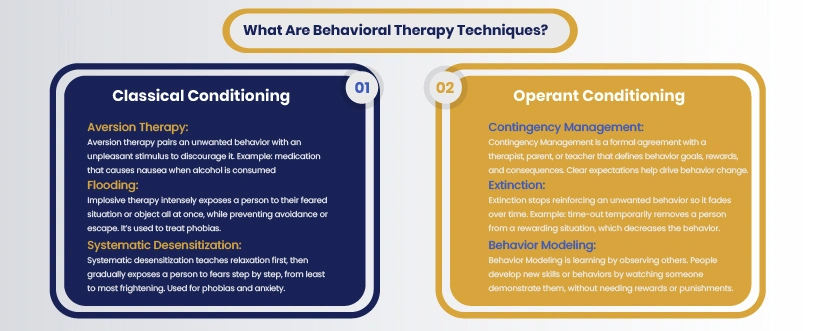
Classical Conditioning
Classical conditioning involves creating connections between stimuli. A neutral stimulus is repeatedly paired with another stimulus that naturally triggers a response. Over time, the neutral stimulus begins to produce the same response on its own.
This approach is commonly used in therapy to help change unwanted behaviors. Several techniques are based on classical conditioning, including:
- Aversion Therapy: This method links an unwanted behavior with an unpleasant stimulus to reduce that behavior over time. For example, a person struggling with alcohol use may take a medication that causes unpleasant reactions, such as nausea or headaches, when alcohol is consumed.
- Flooding: This technique involves exposing individuals directly and intensely to situations or objects they fear. It is often used to treat phobias while preventing avoidance or escape from the feared situation.
- Systematic Desensitization: In this method, individuals first learn relaxation techniques and then gradually face their fears step by step, starting from the least frightening situation to the most frightening one. This technique is widely used to treat phobias and anxiety disorders.
Operant Conditioning
Operant conditioning focuses on how rewards and punishments influence behavior. Behaviors followed by positive outcomes are more likely to be repeated, while behaviors followed by negative consequences are less likely to occur again.
Behavioral therapy uses techniques such as reinforcement, punishment, shaping, and modeling to help modify behavior. These approaches are often highly focused, making them effective in creating positive behavioral changes.
- Contingency Management: This method involves a formal agreement between a client and a therapist, parent, or teacher. The agreement clearly outlines behavior goals, rewards, reinforcements, and penalties. Because expectations are clearly defined, this approach can effectively encourage behavior change.
- Extinction: Extinction works by removing reinforcement for an unwanted behavior so that the negative behavior gradually disappears. A common example is a time-out, where a person is temporarily removed from a rewarding situation. Without reinforcement, the unwanted behavior eventually decreases.
- Behavior Modeling: This technique involves learning by observing others. Individuals develop new skills or appropriate behaviors by watching someone else demonstrate them, rather than relying only on rewards or punishments.
- Token Economies: This strategy uses rewards to encourage positive behavior. Children may earn tokens for displaying desired behaviors and lose tokens for unwanted actions. The earned tokens can later be exchanged for rewards such as toys, treats, or extra playtime.
What Mental Health Condition Behavioral Therapy Treat?
Behavioral therapy is used to treat many mental health conditions. These include anxiety, depression, phobias, and panic disorder. It also helps with Attention-Deficit/Hyperactivity Disorder, Autism Spectrum Disorder, Bipolar Disorder, and Obsessive-Compulsive Disorder. It can also treat eating disorders, substance use disorders, and Borderline Personality Disorder.
This therapy is action-oriented. It focuses on solving problems and changing behaviors. It is also useful for anger management and stress management.
What are the Benefits of Behavioral Therapy?
Behavioral therapy is widely used to treat many conditions. Cognitive behavioral therapy (CBT) is one of the most effective treatments. Cognitive behavioral play therapy also works well for children.
CBT is often more affordable than other therapies. Many people see results during consistent sessions. The number of sessions required depends on the severity of the condition.
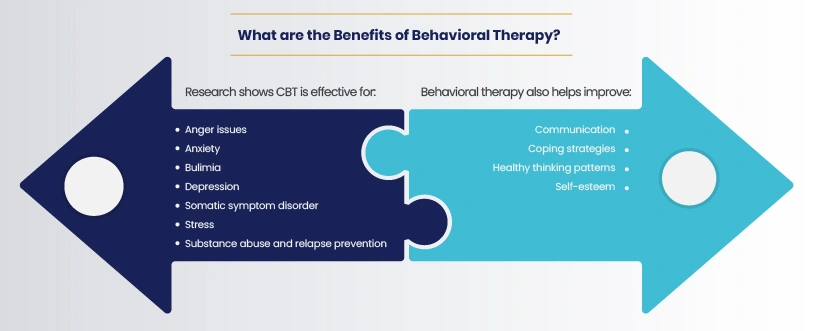
Research shows CBT is effective for:
- Anger issues
- Anxiety
- Bulimia
- Depression
- Somatic symptom disorder
- Stress
- Substance abuse and relapse prevention
Behavioral therapy also helps improve:
- Communication
- Coping strategies
- Healthy thinking patterns
- Self-esteem
How to Find a Behavioral Therapist?
It is overwhelming to find a therapist when you have many options. But you must choose a professional and licensed therapist. You need to consider the following things to choose the right therapist for your mental condition. These include:
- Identify your needs regarding mental condition.
- Check if they are licensed or not.
- Find a provider with specialization in all mental health conditions.
- Try one session of Behavioral Health counseling to check your comfort level.
Conclusion
To conclude this, we can say that behavioral therapy is a research-based technique. It is used to treat multiple mental health disorders such as anxiety, depression, OCD, etc. If you or someone you know is struggling with mental problems than it is recommended to try behavioral therapy. You can achieve more fulfilling and healthier lives with this therapy treatment. Get trusted psychiatrists from Orange Coast Psychiatry to overcome your mental condition.
Orange Coast Psychiatry is a trustworthy mental health service provider with licensed psychiatrists. With our professional team, it is attainable to get positive outcomes in your mental wellness. Our team of experts treats your mental condition with a personalized treatment approach.
Book your appointment now and get back to your healthier life.