
If you place everyone’s needs above your own, you eventually lose sight of your own needs or what you actually want. Putting others first is called codependency. This is not a personal flaw. Maybe you do this because you have learned to do so, or because you have kept the peace. These habits were once useful, but as an adult, they might leave you feeling tired or resentful.
The habits do not define you. These are not who you are. These are just patterns you picked up along the way. And when you learn these patterns, it becomes easier to focus on your own needs.
Change needs time. It is not immediate. It means noticing where your energy and attention go and gently pulling it back to yourself bit by bit. Over time, you start to get your sense back, i.e., your feelings. That sense of who you are, other than the needs of others.
Codependency is the quiet habit of trading your peace for another person’s comfort.
The Reality of Living for Others
If you notice these patterns in yourself, you may feel responsible for how others feel or act. You might pay close attention to your partner’s, parents’, or friends’ moods. When someone is upset, you feel like it’s up to you to make things better. If they make a mistake, you try to help them feel less bad about it.
It’s tiring, isn’t it? Always putting yourself last. You might put your own needs aside so often that you lose track of what you actually enjoy or want. Sometimes, your body communicates and warns you before you realize what’s happening, like tense shoulders, feeling tired even after a full night’s sleep, or getting headaches. These are signs that something isn’t working.

Taking care of everyone else all the time isn’t something you can keep up forever. Sooner or later, you may realise you have nothing left for yourself.
Why Do We Do This?
Most people don’t choose this pattern on purpose. It usually starts in childhood. If you grew up in a home where love depended on your behavior and actions, you may have learned that being helpful was the best way to get attention or avoid any conflict. With the passage of time, you learned to read other people’s moods, because your own sense of safety depended on it.
As an adult, you may worry that people will leave if you stop being helpful. It can seem like your value depends on what you do for others rather than on who you are.
To change this, you need to start questioning the belief that you only matter when you are solving someone else’s problems.
How to Fix Codependency?
The first step you can take is acknowledging your actions. You have to notice when you are living in your own world or someone else’s. The simplest way is to practise, and ask yourself, “whose needs am I serving right now, mine or someone else’s? These small questions help you shift your priorities and abstract ideas into a practical, lived habit.
Work to Improve Your Self-Esteem
When you begin to believe that your needs are important, you may feel more confident and resilient. Setting boundaries can become easier, and your relationships may feel more respectful and fulfilling. Set your mind on believing that your needs matter and you are worthy of care and attention.
This will also help to boost self-esteem over time.
Codependency and self-esteem often go together. If you have trouble understanding your own worth, it can be hard to set healthy boundaries or ask for what you need. Building up your self-worth can help you feel more confident and able to trust yourself.

Everyone needs support at times, and it is okay to rely on people you trust. But in codependent relationships, this need for support becomes unhealthy and makes it harder for you to care for yourself. The helpful questions to ask yourself might be:
- How much do others value me?
- Do I feel guilty or anxious when I take care of myself?
- Do I struggle to recognize what I need or want from others?
Taking a few moments to answer these questions can help you spot codependent patterns and better understand your own needs.
Examples of codependency
There are some examples of how codependency can show up:
In parent child relationship, it will look like:
- Feeling compelled to handle everything for an adult child who should be independent.
- Getting a sense of meaning or purpose from financially supporting an adult child.
- Not letting a child do anything on their own.
- Sacrifice everything to care for a parent.
- Ignoring other responsibilities and relationships to meet parents’ demands.
- Avoiding conversation or discussion about family problems to avoid conflict.
In romantic relationships, it will look like:
- Doing a lot of care, wasting energy on a partner who is an alcohol or substance addict, even when you are exhausted.
- Making excuses or covering for the other person’s bad behavior.
- Putting aside your self-care, work, or other relationships to take care of your partner.
- Tolerating a partner’s destructive and unhealthy behavior.
- Not letting their partner take responsibility for their own life.
- Not giving independence to a partner.
Why it happens
People often learn codependent behaviors by watching and coping with family members. These patterns can be passed down through generations. If you saw codependent relationships growing up, you might notice yourself repeating similar behaviors.
Codependency usually happens in families where people feel anger, pain, fear, or shame, but do not talk about it. When different emotions are kept hidden, children can become hyper-vigilant, always watching for signs of trouble and learning to suppress their own feelings. This silence around pain can make it hard to know what is normal. It leaves people anxious and always on alert. Some things that can cause these problems include:
- Drug addiction, alcohol, work, food, sex, gambling, and relationships.
- Abuse (it could be physical, emotional, or sexual).
- Chronic physical illness and mental illness.
In many families, people do not talk about problems openly. Those who are codependent may avoid talking about issues. Family members might ignore their own feelings and need to focus on the person who is struggling, as over time, this can hurt their own health, relationships, and happiness.
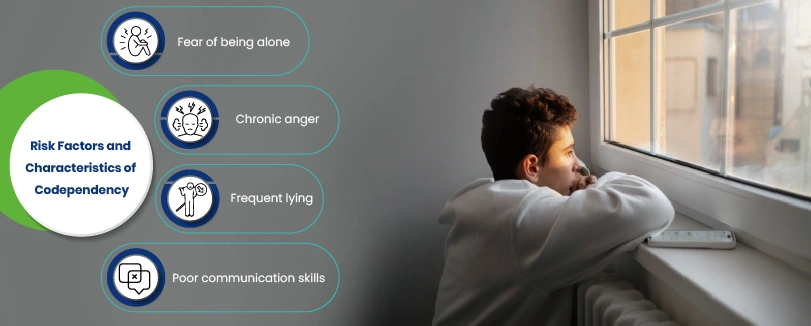
Risk Factors and Characteristics of Codependency
Anyone can experience codependency, but some things can make it more likely, such as:
- Fear of being alone or abandoned
- Lack of trust in self or others
- A need to control other people.
- Chronic anger
- Frequent lying
- Poor communication skills
- Trouble making decisions
- Problems with intimacy
- Difficulty establishing boundaries
- Trouble adjusting to change
- An extreme need for approval and recognition
- A tendency to become hurt when others don’t recognize their efforts
- An inclination to do more than their share all the time
- A tendency to confuse love and pity.
- An exaggerated sense of responsibility for the actions of others.
Codependency is more common in adults who grew up with parents who had problems with drugs or alcohol, lived in stressful families, have children with behavioral problems, or care for someone who is sick.
Women are more likely than men to develop codependency.
The Role of Professional Support
Breaking these habits alone is difficult because they are so deeply rooted in your history. It can be hard to deal with codependency on your own, especially when it has been part of your life for a long time. Getting support from professionals can help you notice patterns that you might otherwise overlook.
Group sessions can be especially helpful, since you might see your own experiences reflected in others. This can help you understand that you are not bad or broken. Instead, you have been using a survival strategy that may have helped you in the past, but is no longer needed.
Therapy gives you a safe place to talk about where your behaviors come from, without fear of being judged. You can learn ways to handle the anxiety that might show up when you begin to set boundaries or say “no.” Most of all, therapy can help you reconnect with the person you were before you felt the need to put everyone else first.
Why Choose Orange Coast Psychiatry?
Recovery is a process that works best when it’s tailored to you. At Orange Coast Psychiatry, you’ll find a safe, confidential space where you can talk openly about your experiences, without fear of judgment or criticism. The focus is on understanding you as a whole person, not just your symptoms. The aim is to help you build a life where your happiness doesn’t depend on what others think.
You can choose from several treatment options, depending on what feels right for you. Most sessions last about 50 minutes and are usually once a week, but you can adjust the schedule and format to fit your needs. Sessions are available in person or online, so you can pick what works best for your life.
Our Strategic Treatment Options
- Individual Psychotherapy: Meet with a therapist one-on-one to explore where your behaviors come from and find practical ways to make positive changes.
- Group Therapy: Join others who understand what you’re going through. Sharing your experiences in a group can help you feel less alone. Hearing your story from someone else can give you new insight. Group sessions help you see your experiences in others and find support together.
- Family Counseling: When helpful, we meet with families to support everyone in learning healthier, more balanced ways to relate to each other.
- Medication Management: If anxiety or depression is part of your experience, medical support may be needed. Our psychiatrists offer thoughtful, evidence-based care.
- Telehealth Services: You can meet with us online and get support from home. Our secure telehealth platform keeps your privacy safe.
Healing is possible, but change doesn’t always happen in a simple way. Setbacks and slipping into old habits are normal. What matters is showing up for yourself each day, not being perfect. You can learn to care for others without losing yourself.
If you are not sure where to begin to break the cycle of codependency, you can ask our team for support. Taking this first step can show you what support feels like in a safe and welcoming space, and help you decide if you want to keep going.
You can get started by filling out the intake form or by contacting our intake coordinator by phone or email. Our team is here to answer your questions and help you get started.