Social media has transformed how we connect, interact, and absorb information. For many of us, checking Instagram, TikTok, Facebook, and other social media platforms is a daily habit. It can encourage community, give a voice to many, and offer support, but its impact on mental health is significant. Social media can affect your mental health in both positive and negative ways. Although it helps connect with friends and raise awareness on current issues, overuse can harm mental well-being.
Excessive scrolling may trigger negative feelings, isolation, and dissatisfaction that can result in symptoms of depression and anxiety. In this blog, we will shed light on how social media affects mental health and ways to protect it.
What are the Pros and Cons of Social Media?
Pros of Social Media
Here are some of the social media pros.
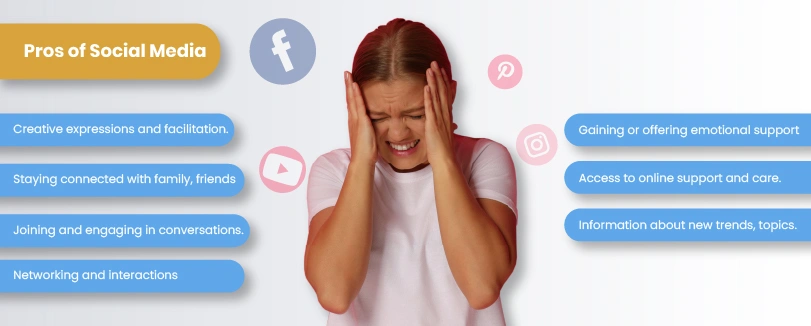
- Creative expressions and facilitation.
- Staying connected with family, friends, and loved ones who live far away.
- Networking and interactions with like-minded people and groups.
- Joining and engaging in worthwhile conversations.
- Gaining or offering emotional support in challenging times.
- Access to online support resources and care.
- Information about new trends, topics, and trends.
Cons of Social Media
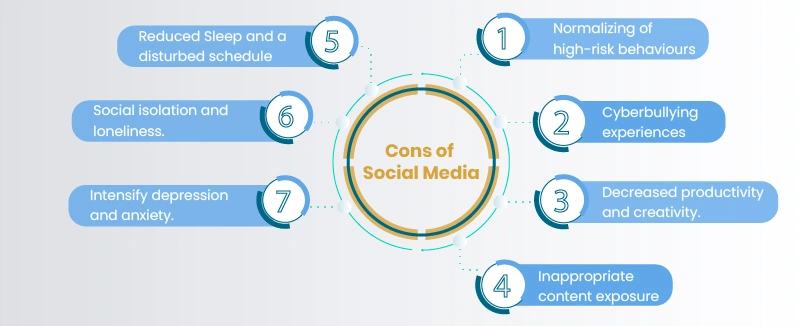
Here are some significant cons associated with social media influence for mental health.
- Normalizing of high-risk behaviours
- Cyberbullying experiences
- Decreased productivity and creativity.
- Inappropriate content exposure
- Reduced Sleep and a disturbed schedule
- Social isolation and loneliness.
- Intensify depression and anxiety.
- Reduced physical activities
Why is Social Media Bad for Mental Health?
Despite the enormous popularity of social media, we need to be cautious. There is a strong connection between excessive social media and the rising risk of depression, anxiety, loneliness and even suicidal thoughts.
U.S. Surgeon General Dr. Vivek Murthy issued an advisory in 2023. It is to represent “the growing concerns about the effects of social media on youth mental health.” The advisory features several research findings linking social media use with mental health problems. For instance, it shows that American teens, ages 12 to 15, who spent more than three hours every day on social media faced double the risk of mental illness. This can lead to worsened symptoms of anxiety and depression.
Some people, especially teens, use social media not only to pass the time. They use it as a primary mode of connection, identity exploration, and even entertainment. The Pew Research Center survey on teen technology and social media habits (2023) shows how enclosed this digital world has become:
- A smartphone is accessible to 95% of the teens.
- 93% regularly use YouTube.
- 63% use TikTok, 60% use Snapchat, and 59% use Instagram.
- Nearly 1 out of 2 teens is online almost constantly.
- 38% of teens wish they spent less time on social media.
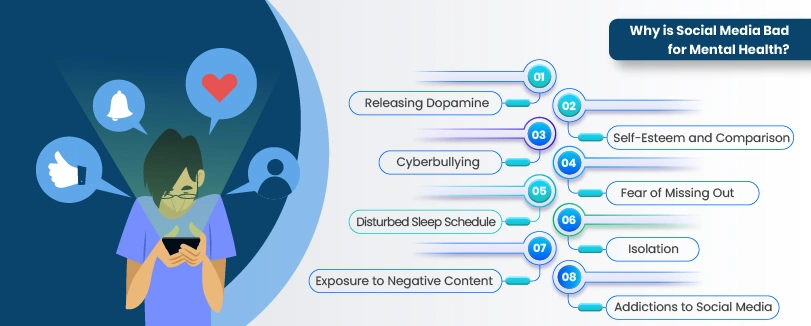
The negative effects of social media include Dopamine Release, low self-esteem, and fear of missing out.
Here is how social media can affect your mental health.
Releasing Dopamine
The excessive use of special media releases dopamine and activates the brain’s reward center. Dopamine is a feel-good chemical associated with delightful activities. When our friends and family like our posts, it gives a boost of dopamine. If we don’t get that approval, it can affect our sense of adequacy.
Self-Esteem and Comparison
Continuous exposure to others’ lives on social media can result in feelings of low self-esteem and comparison. People may start comparing their lives to others on social media. It can cause depression, stress, and anxiety.
Cyberbullying
One of the most significant effects of social media is cyberbullying. You can be insulted, threatened, and harassed through it. It causes anxiety, stress, and even leads to suicide.
Fear of Missing Out
Watching others on social media celebrating at social events and partying can lead to FOMO. It can result in a sense of exclusion and anxiety.
Disturbed Sleep Schedule
The blue light emitted by screens can disrupt the body’s natural sleep-wake cycle. It can lead to disturbances in sleep schedule and insomnia. Overusing social media, especially before bedtime, can affect sleep quality. It, in turn, affects day-to-day life and mental well-being.
Isolation
Over-scrolling on social media may cause feelings of loneliness and isolation. Social media provides a medium for connecting online with others, but it also distracts from real-world interactions. This can lead to social withdrawal and feelings of loneliness.
Exposure to Negative Content
Negative or distressing content exposure on social media is also affecting mental health. Content regarding violence or disaster can cause anxiety, trauma, and stress.
Addictions to Social Media
Social media platforms are designed to make people addicted. The features like likes, comments, and notifications trigger dopamine release in the brain. Overuse of social media can make you addicted.
How to Protect Mental Health While Using Social Media
The following are effective therapies to recover from mental conditions caused by excessive use of social media.
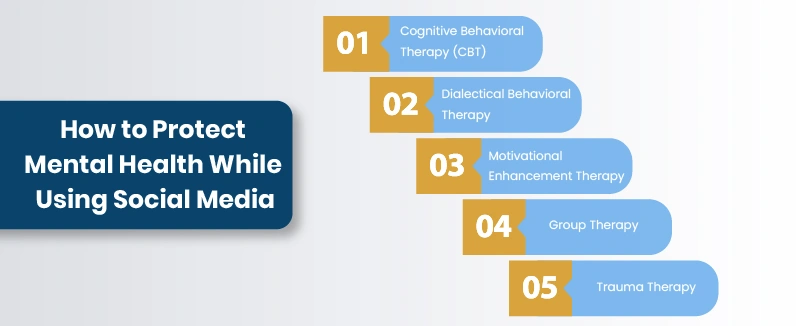
Cognitive Behavioral Therapy (CBT)
CBT is one of the most effective treatments for mental health conditions. It is often combined with other therapies to treat intrusive thoughts and change extreme behaviors. Working one-on-one with your therapist will help you to know the negative thoughts that lead to self-destructive feelings and actions.
Once you understand this pattern, you can learn how to change your thoughts and improving responses. CBT is good for individuals with various mental health disorders, including anxiety disorders or depression.
Dialectical Behavioral Therapy
Dialectical behavioral therapy (DBT) focuses on changing your behaviors, using CBT as a base. However, DBT also teaches individuals to accept their negative emotions rather than ignore them. They can learn to find a healthy balance between the two.
DBT is good for individuals who have multiple mental illnesses. They may struggle more with focusing on getting rid of negative thoughts. Your therapist can help you improve your coping skills and learn to balance your emotions.
DBT teaches you to increase your tolerance to distress, understand emotions, and be mindful when triggering events happen.
Motivational Enhancement Therapy
MET can help someone with a mental illness or addiction who is hesitant to change. Motivational enhancement therapy is used to inspire individuals who are struggling with addiction and seeking help.
This therapy aims to help someone view their life purposefully and be authentic about their self-destructive behaviors. A MET therapist does not tell someone directly what is wrong with their mental condition. Instead, they inspire them to take an honest look at their lives, which leads them to change.
Group Therapy
Group therapy is a kind of psychotherapy. It allows a group of people to visit together for therapy. It focuses on one topic and offers a safe setting where a group of people can come, ask questions, and get advice from a psychiatrist. The group setting can reduce feelings of isolation and support for people who feel uncomfortable sharing particular things with friends or family.
Trauma Therapy
Traumatic experiences can disturb our emotional development and daily activities. For example, if someone starts using drugs due to any trauma at the age of 15, their emotional growth will stop until the trauma is processed. The body will continue to age, but the mind stops growing. Social media can also cause trauma with inappropriate, negative, and abusive content. In this case, trauma therapy can help the patient.
Traumas can include surviving road accidents, sexual or physical abuse, exposure to negative content, and even losing a loved one. There are different effective therapies to treat trauma, including EMDR, or eye-movement desensitization reprocessing, TRM, trauma resilience model, the post-induction therapy model, and trauma-focused cognitive behavioral therapy. Your therapist can also choose a combination of therapies to increase the likelihood of success.
Seek Help from Orange Coast Psychiatry
If you feel addicted to social media and it is affecting your mental health, then you should seek help. Mental health can be disrupted due to overuse of social media, but the good news is that there are many therapies to treat certain mental conditions. You should never ignore anxiety, depression, disordered eating, or suicidal thoughts. The most important thing you can do is ask for help from a psychiatrist.
At Orange Coast Psychiatry, we have a team of mental health experts committed to providing high-quality telepsychiatry services. We make mental health care more accessible, easy, and effective for all our patients. You can choose telepsychiatry sessions, in-person appointments, or a combination of both. We aim to provide you with the care that best meets your mental health needs. Our telepsychiatry is for children, adolescents, and patients who live in isolated areas where access to mental health specialists is limited. Individuals who can easily visit us can also book in-person appointments.