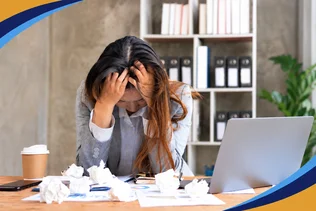
Do you remember when your favorite things made you excited, but now the thought of doing them just makes you feel exhausted?
It’s completely normal, as most people change their interests and hobbies over time. However,
Losing interest in activities or routines a person once enjoyed can be concerning, especially when it lasts for weeks or affects daily life.
It may be associated with depression, burnout, grief, trauma, sleep problems, substance use, certain medications, or physical health conditions.
A person experiencing depression may have no interest in all the activities that they used to enjoy. It also affects relationships, employment, academics, goals, or routines they once loved. Going through this can feel depressing, and a person might feel like they have lost themselves.
Understanding this condition is crucial as it helps in diagnosing the condition earlier and helps in getting better treatments.
What Is Loss of Interest or Anhedonia?
Losing interest in everything you once wished for can make everyday life harder. This experience is known as anhedonia. It is also a common and important symptom of depression and can manifest in two ways: social anhedonia and physical anhedonia.
Let’s know more about it:
Social Anhedonia
Social anhedonia means losing interest in spending time with other people and no longer enjoying social interactions or relationships.
Physical Anhedonia
Physical anhedonia is an inability to feel pleasure from activities such as eating or touching. An individual may understand the outcomes, but they may have difficulty feeling the same emotional connection or excitement.
What Does Anhedonia Feel Like?
Anhedonia reduces the ability to feel pleasure or interest in pleasurable, rewarding stimuli. People who don’t have an interest in life no longer feel joy and happiness.
It often happens because of:
- Depression
- Burnout or overworking
- Grief or trauma
- Stress that lasts a long time
- Severe tiredness
- Relationship problems
- Lethargy
Statistics
In the Diagnostic and Statistical Manual of Mental Disorders-5-TR (DSM-5-TR) anhedonia was one of the core symptoms of depression. The National Library of Medicine also indicated that approximately 70% of patients with MDD showed clinical features of anhedonia. Depression is typically higher in women compared to men.
Read more: Understanding The Connection Between Male Depression And Emotional Affairs.
What Causes Loss of Interest?
The reasons behind the loss of interest in understanding are very simple. Most people who have lost interest in everything are dealing with multiple stressors rather than one clear cause; these may include:
1. Depression
Depression is a mental health disorders in which a person experiences a loss of interest and remains sad most of the time. It can occur at any point in life and can be linked to certain events such as grief, major illness, work performance, or even loss of a loved one. If symptoms persist, worsen, or interfere with daily functioning, professional assessment can help.
Depression may also involve:
- Melancholy, sadness, void, or numbness
- Fatigue or low energy
- Changes in bedtime or eating patterns
- Problem concentrating or difficulty making decisions
- Hopelessness, guilt, or worthlessness
- Withdrawal
Depression can occur differently for different people, so even if you are going through other symptoms not on the list above, you should not rule out depression as underlying your loss of interest until you talk with a mental health professional.
2. Major Depressive Disorder
Major depressive disorder (MDD) is one of the most common and disabling psychiatric disorders, and anhedonia has been highlighted in the diagnosis of depression and is a core feature of MDD.
Major depressive disorder symptoms may include
- Persistent sadness, hopelessness, emptiness, or irritability
- Loss of interest or pleasure in activities
- Sleep problems, including insomnia or oversleeping
- Low energy and ongoing tiredness
- Changes in appetite and weight
- Anxiety or restlessness
- Slowed thinking, speech, or movements
- Feelings of guilt, worthlessness, or self-blame
- Difficulty concentrating
3. Burnout and Chronic Stress
People experiencing burnout feel a loss of interest in the things they once used to enjoy as burnout turns the joyful things into to-do list tasks that feel like a burden. Excessive stress can also affect the brain and cause one to experience a loss of interest. It is because the brain focuses more on survival mode rather than on pleasure or connection.
During chronic stress, attention can become focused on solving problems, managing responsibilities, planning, avoiding mistakes, or simply getting through the day.
4. Grief
People who have experienced grief after losing a loved one may also feel no joy in the real world. It is because they remain in stress most of the time, which ultimately leads to a loss of interest. Grief does not follow a specific timeline; it can go away with time. However, getting help from a mental health professional can be really helpful.
4. Trauma and Emotional Breakdown
People can experience an emotional breakdown when they experience overwhelming stress. In this state, a person may feel numb, flat and disconnected and may avoid everyone around them. Also, it is connected with trauma, as traumas such as physical abuse and childhood abuse can also make the brain go into a protective response.
5. Postpartum Depression
Major emotional changes after childbirth can affect interest, energy, sleep, and emotional connection. Get a professional assessment when loss of interest is persistent, severe, or accompanied by other concerning symptoms.
6. Other Possible Causes
Loss of interest can be linked to conditions such as substance misuse, schizophrenia, schizoaffective disorder, eating disorders, and other health conditions such as dementia.
Get Immediate Help for a Mental Health Crisis
If you are having thoughts of harming yourself, suicide, or feel unable to stay safe, call or text 988 to reach the Suicide & Crisis Lifeline in the United States.
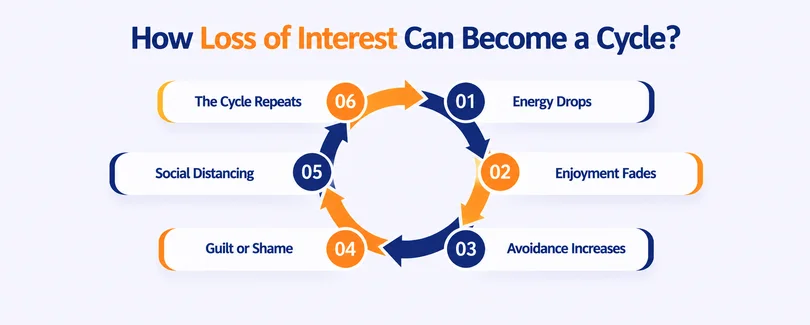
How Loss of Interest Can Become a Cycle?
Loss of interest can become self-reinforcing when disconnection leads to withdrawal, guilt, and fewer opportunities for meaningful experiences.
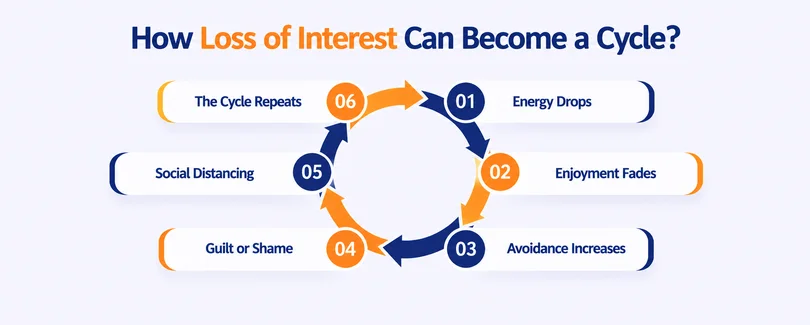
- Energy Drops
Depression, burnout, stress, grief, or shutdown reduces emotional and physical capacity.
- Enjoyment Fades
Activities that once felt meaningful begin to feel flat, distant, or like too much effort.
- Avoidance Increases
You may stop making plans, cancel activities, or pull away from people and routines.
- Guilt or Shame
You may criticize yourself for not caring, not showing up, or not feeling like yourself.
- Social Distancing
Fewer meaningful experiences can make life feel even more disconnected or empty.
- The Cycle Repeats
The less connection and enjoyment you experience, the harder it may feel to reengage.
How is Insomnia Linked to Loss of Interest?
Insomnia and losing interest in things you usually enjoy can occur because of anhedonia. It can be related to mental health issues, changes in the brain, or side effects of medicines. When they happen together, they may be caused by the same underlying problem. Treating one may also help improve the other.
Read more: The Connection Between Sleep and Depression
What is the Difference Between Loss of Interest and Avoidance?
Lack of interest and avoidance are two very different things, and distinguishing between the two may be helpful. When a person feels like they don’t want to do something they used to enjoy. This is the point where they should ask themselves whether they have a loss of interest in the activity or negative feelings about it.
Moreover, avoidance may be a sign that a person has new, negative associations with the activity they used to enjoy. If this is the case, a professional mental health expert can help you to identify conditions.
When Should You Seek Professional Help?
If the symptoms persist for several weeks or interfere with daily functioning, professional support can help in managing the condition.
Here is when you need professional assistance:
- If you are struggling with losing interest, see your doctor.
- Getting support early can help prevent a mental health condition.
- Getting help early can also prevent a condition like depression from getting worse over time.
- You should see your doctor if you experience symptoms like these for more than 2 weeks.
Professional Treatments
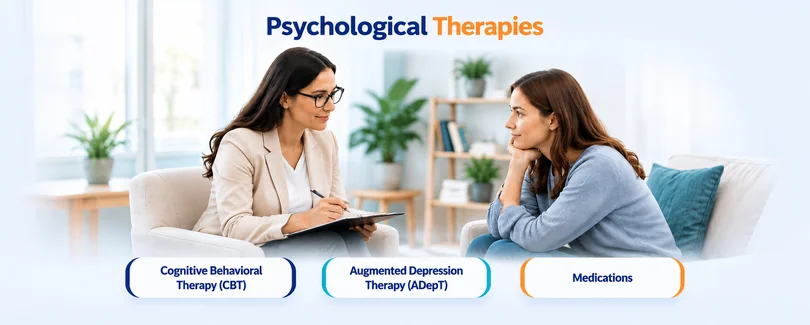
Professional support, such as therapy, is really helpful for managing conditions that are related to depression or burnout. Therapies can help people manage mental health conditions that are linked to loss of interest or anhedonia.
Psychological Therapies
Cognitive Behavioral Therapy (CBT): It’s an evidence-based therapy that helps in changing unhelpful thoughts and also improves your feelings of interest and motivation. A newer approach called Augmented Depression Therapy (ADepT) also showed better results for improving anhedonia. Other treatments, such as noninvasive brain stimulation, including tDCS targeting the left DLPFC, may also help reduce anhedonia in people with major depressive disorder.
Psychiatric Medication Management
Some medicines can help treat loss of interest caused by depression. This might include medicines like antidepressants and antihistamines, along with psychological therapy.
How to Cope with Loss of Interest?
Recovery is possible with the right professional support, as it can be managed gradually through consistent, manageable steps. It is suggested by psychiatrists that those who have lost interest in everything, and wants to rebuild emotional connection requires patience and realistic expectations.
Rebuilding interest often starts small. The goal is not to force joy, but to create conditions where connection and meaning can gradually return.
- Practice Self-Care
Practicing self-care can help you feel better about yourself, which may revive your motivation. If you are feeling a loss of interest, try a less extensive version of the activities you usually enjoy. It’s worth taking small steps, even minimally, to engage in activities you once loved.
- Stay Connected
It’s important to stay connected with those you love and those who bring light into your life.
- Build a Routine
Eat healthily, get enough sleep, make a friend with similar hobbies, and join a club or a class.
Online Help for Depression
If disconnection continues and daily life feels increasingly difficult, reaching out for professional guidance online can make a meaningful difference.
Takeaways
- Loss of interest makes one lose interest in things and people.
- This can be a sign of a mental health condition like depression or burnout.
- Rebuilding interest often starts small. The goal is not to force joy, but to create conditions where connection and meaning can gradually return.
- If the symptoms are unable to manage, speak to a mental health professional as they can recommend treatments.
Exhausted from Feeling Tired? Get Help at Orange Coast Psychiatry
If you find that your mental health is impacting your life, seek help. Getting help can help prevent loss of interest and the development of a mental health condition.
At Orange Coast Psychiatry, we have a compassionate team of mental health professionals in California who provide supportive, personalized care designed to help restore balance, motivation, and emotional clarity. We cover a wide range of insurance and also offer self-pay options and out-of-pocket options, so you don’t have to worry about the bills. You can also get virtual treatments from the comfort of your home and get psychiatric medication management.
Book Your appointment at Advanced Health Preferences Group!