
Psychosis is a set of symptoms that defines a person as losing contact with reality. In simple terms, symptoms- hallucinations, delusions, and disorganized thinking- make it difficult for a person to recognize reality and fantasy.
Psychosis is not a specific diagnosis or mental health condition. Instead, experiencing psychotic symptoms is a core sign of the development of several mental disorders and physical conditions.
Key Takeaways
- Psychotic disorder is a cluster of symptoms, including hallucinations, delusions, disorganized thinking, and more.
- Psychosis is not a mental illness itself, but a core sign indicating the development of a psychotic disorder.
- The duration of a psychotic episode varies, depending on the diagnosis. It could be brief or last for 6 months to a year — with repeated cycles — or appear once in a lifetime.
- Its symptoms can be easily managed with treatment, including psychotherapy and medication.
What is Meant By Psychosis?
Psychosis is a loss of recognition of reality. This means people who experience this have wrong beliefs, such as paranoia, grandiose ideas, etc., and feelings of hearing unrealistic voices and seeing objects that others do not, which significantly affects their lives.
Psychosis is not a mental disorder on its own. But it’s a core symptom or warning sign of several mental disorders, such as schizophrenia, schizoaffective disorder, and bipolar disorder.
How Common Is Psychosis?
It is not as common as other common mental health conditions, like anxiety and depression. According to studies and numerous resources, like Wikipedia, psychosis affects a few percent of people, approximately 3%. These 3% are those who meet the criteria to be officially diagnosed with psychiatric disorders at some point in their lives.
Despite this, it is also highlighted that 60 to 80 per 100,000 people per year experience a first episode of psychosis. Also, it is noted that psychotic episodes are mainly noticed in individuals in the age group of late teens to mid-20s.
Psychosis vs Psychotic Disorder vs Schizophrenia: Major Misconceptions
The one major misconception among people is that psychosis and psychotic disorder are the same, which is obviously not the case. Here’s the difference:
- Psychosis: A collection of symptoms causing short-lived or repeated loss of reality
- Psychotic Disorder: A specific mental disorder in which psychosis is a core symptom
So, experiencing psychosis doesn’t mean you have a psychotic disorder, such as brief psychotic disorder or schizophrenia. Instead, both are specific mental illnesses, and what defines brief psychotic disorder vs. schizophrenia is:
- Brief Psychotic Disorder: A short-term mental condition, lasting from one day to less than a month
- Schizophrenia: It is an officially diagnosed mental disorder in which psychosis appears as a symptom and lasts for at least 6 months.
Do Psychotic Experiences Mean Having Psychotic Disorder?
No. Sometimes psychotic experiences occur to all of us at some point in our lives. They can include things like hearing your name or feeling suspicious about yourself, right? So, these isolated psychotic-like experiences are normal and don’t mean having a psychotic disorder. Instead, studies show that about 5% to 7% of the general population experience them. This is because some other non-psychiatric factors trigger psychosis symptoms, hallucinations, delusions, and disorganized thinking, such as substance use, sleep deprivation, and medical conditions.
However, if they become persistent and cause distress, an evaluation is a good decision.
How to Know Someone is Experiencing Psychosis?
Understanding the symptoms of psychosis is necessary for early diagnosis and treatment. During a psychotic episode, individuals often experience the signs below:
- Hallucinations: Seeing things that are not there or hearing voices, such as someone calling, footsteps, and more.
- Delusions: Having false beliefs that feel hard to recognize as imagination, even with clear evidence, such as receiving secret information from TV, something is tracking me, etc.
- Disorganized Thinking: Difficulty maintaining or following effective communication, such as jumping between topics, word salad, etc.
These are some of the major symptoms of psychosis that most people experience. Despite these, several other signs can be noticed, depending on the stage of the psychosis. If you want to know what psychosis feels like, including all the common feelings and signs you need a psychiatrist? Read our detailed guide on it.
What Causes A Break from Reality?
There’s no single cause of psychosis; this is what researchers have found so far, and what numerous studies have revealed. With no exact cause of the occurrence of psychotic symptoms identified, researchers believe it is a combination of several factors.
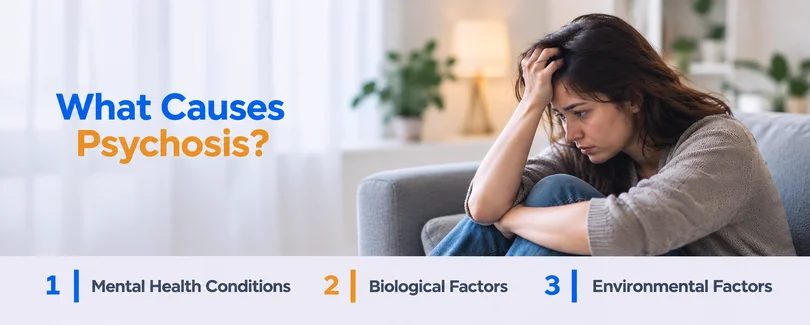
Below are different verified, large-scale studies that have focused on psychosis and that help contribute to what we all know about it. And following are some crucial points that each study identified:
| Study | What did they identify? |
| PGC GWAS | Schizophrenia risk is influenced by hundreds of common genetic variants; this supports a polygenic genetic vulnerability to psychosis. |
| EU‑GEI | Childhood trauma, migration, social disadvantage, and cannabis use each raise psychosis risk |
| NAPLS | In at‑risk youth, early brain, inflammatory, and stress‑system changes predict who transitions to psychosis |
So, we have identified that all the major studies below have one similar point: psychosis arises from polygenic risk interacting with developmental, social, and biological stressors over time.
For your ease of understanding why you or someone you love experiences a psychotic episode, below is the complete breakdown of possible factors involved:
1. Mental Health Conditions
Several psychiatric conditions can cause reality break; these include:
- Schizophrenia
- Schizophrenia spectrum disorders
- Schizoaffective disorder
- Bipolar disorder
Can depression and anxiety cause psychosis?
Yes. Many people are unaware that several common mental health disorders, such as depression, which people often ignore as “being sad”, and anxiety, with “being nervous”, can also cause psychotic symptoms. Surprisingly, these common conditions, when they become severe or intense, can also develop psychosis.
Psychosis occurs in people due to an intense stage of depression known as major depression with psychosis. In contrast, symptoms such as hallucinations or delusions due to extreme anxiety levels are often referred to as anxiety-induced psychosis.
2. Biological Factors
Below are some of the factors that increase the risk of triggering a psychotic episode, but don’t cause it themselves:
- Genetics: Having a family history of psychosis can increase the chance of developing or experiencing it
- Neurochemical Dysregulation: Changes in brain chemistry, such as fluctuations in levels of brain chemicals like dopamine, glutamate, and serotonin, can cause a person to experience hallucinations and delusions
3. Environmental Factors
- Extreme stress: Experiencing severe stress mainly because of major life changes, such as leaving home, losing someone, or going through financial struggles, can lead a person to experience psychosis symptoms. This type is known as stress-induced psychosis.
- Sleep Deprivation: Healthy sleep habits boost our brain’s ability to function properly and keep us mentally and physically active. However, poor sleep habits or not getting 7 hours of sleep continuously causes a sleep deficit. This wakefulness can also push a person to experience an escape from reality, known as sleep deprivation psychosis.
- Trauma and abuse: Childhood trauma, abuse, or violence are also factors associated with its development.
4. Substance Use
- Drugs: Excessive use of drugs, such as cannabis, cocaine, and dissociatives, can directly induce psychosis.
- Alcohol: People heavily use alcohol to seek relief from depression and anxiety, which increases the risk of hallucinations and delusions. Symptoms can also be noticed during sudden withdrawal.
These are some of the causes that can lead to experiencing psychosis symptoms. However, it is important to understand that no single factor causes symptoms like hallucinations and delusions; several factors do.
What Are the Stages of Psychosis?
When experiencing a psychotic episode, a person passes through different stages. Psychosis doesn’t start with full intensity, nor does it cause a sudden break from reality. Instead, it follows a typical progression, divided into 3 main phases, including:
- Prodrome
- Acute Phase
- Recovery Phase
Early intervention helps ensure faster recovery. Unfortunately, because many people are unfamiliar with mild symptoms, they are often ignored. So, if you want to know what symptoms are noticeable signals of the need for comprehensive evaluation and treatment, read our detailed guide on the stages of psychosis. It explains everything, from signs at each stage to common experiences.
How Does It Affect Different Age Groups?
Psychosis affects every age group differently. How it appears also depends on a person’s age. Here’s how it affects different age groups:
Psychosis in Teenagers
Most individuals experience signs of a psychotic break in their teens. This means teenagers are at higher risk of a first episode of psychosis. Due to its symptoms, such as seeing things or hearing voices, teenagers often show signs including withdrawal from friends, reduced performance in academic life, and more.
Psychosis in Young Adults
Individuals aged 18 to 29 or 18 to 35 are also at a stage of life where some young adults lose touch with reality. This affects their professional life and causes several challenges in maintaining healthy relationship boundaries. Also, experiencing prolonged psychosis signs can lead to harmful, risky behaviors, such as substance use, which worsen the conditions further.
Psychosis in Elderly People
Psychosis in elderly people or older adults is less common. However, some people in this age group experience it, which affects their mental and physical health. Also, it can increase the chance of being diagnosed with depression. Want to learn more about psychosis in elderly people, including signs and what possible treatments are available, whether medications help, or non-pharmacological approaches remain the best alongside psychotherapy? All explained in our detailed guide.
Can Psychosis Be Prevented?
No. Psychosis can’t be prevented. The reason is that experiencing a break from reality can be due to several factors and is a response to many mental health conditions, which can’t be spotted or predicted in advance. However, it can be treated.
How Is Psychosis Treated?

For treatment of psychosis, many clinically proven treatment approaches are available. Each method has its unique approach to managing symptoms and helping people live a normal life. Here’s how it can be effectively treated:
Psychotherapy
Psychotherapy is one of the most effective and reliable treatments for everyone suffering from psychosis. It helps individuals reframe their thoughts and wrong beliefs while also playing an important role in managing distressing symptoms.
Psychotherapy, also known as talk therapy, has many treatment techniques; however, Cognitive Behavioral Therapy (CBT) is widely used for psychosis and mental conditions in which hallucinations or delusions are a response. It teaches individuals practical skills to control thoughts and impulsive behaviors, reducing negative experiences and preventing relapse.
Psychotherapy also involves group therapy sessions with family members to improve communication or provide guidance, such as how to talk to someone experiencing delusions and other signs during a psychiatric episode, ensuring support, encouragement, and trust.
Medication
Psychosis can also be treated through medications like antipsychotics, and many other forms of medication, such as antidepressants, can also be beneficial depending on the conditions. Medications such as first-generation antipsychotics (FGAs), or typical antipsychotics, help block dopamine D2 receptors. As we discussed earlier, excessive dopamine can cause delusions or hallucinations; controlling the level ensures a significant reduction in such symptoms and also makes them feel manageable.
Also, second-generation antipsychotics (atypical antipsychotics) also help block serotonin receptors, helping balance brain chemicals to calm or control neurochemical activity in the brain.
However, medication for psychosis offers temporary relief from these signs, causing mental overwhelm and emotional pain, not a permanent cure. Additionally, it can take weeks to months to lower symptom intensity and offer relief.
It is important to understand that medication is not a single, standalone treatment solution for managing symptoms that cause loss of contact with reality; instead, psychiatrists often prescribe medication alongside therapy.
As Michael Garrett, MD, a professor emeritus of clinical psychiatry at SUNY Downstate Medical Center, explains in a podcast interview:
“Psychosis is best understood and treated through an integrative approach that combines empathic psychotherapy with medication. “
Take Your First Step Towards Personalized Care!
When you notice psychosis symptoms that indicate the need for a psychiatrist, the next step is choosing the right care. Orange Coast Psychiatry offers personalized care to individuals experiencing hallucinations or delusions to help improve their mental wellness. Our certified psychiatrists provide holistic care to every individual while maintaining clinical standards and accuracy from diagnosis to recovery.
We treat patients through evidence-based approaches, combining psychotherapy, medication, counseling, and specialized group sessions to ensure lasting wellness.
If you are looking for a psychiatrist accepting new patients in California, choose OCP as your trusted mental healthcare provider. We offer care through in-person visits and also provide telepsychiatry for psychosis. So, choose any treatment model that matches your needs to book your appointment. Call (714) 683-1472 for assistance or fill out the form!