Do you become so fearful of a small insect, or just by travelling in a plane, that you feel like you may faint?
Most of us feel scared of things, which is quite a normal experience for a human being, but if the fear becomes so intense that it turns into a phobia. Phobias are a type of anxiety that causes overwhelming distress and affects different areas of life.
A phobia can make a normal situation feel life-threatening because it revolves around severe, intense fears. These fears can be of specific objects or situations, such as animal phobia, thalassophobia, tryphophobia, and more.
Key Takeaways
- Specific phobia is a formal anxiety disorder ranked in the DSM-5-TR. It is one of the most common mental conditions in the United States.
- Whether a phobia involves common fears like heights or rare triggers like numbers (arithmophobia) or mirrors (eisoptrophobia), the brain’s threat-detection system reacts similarly by overriding typical rational responses.
- It’s a manageable condition with highly effective therapy options for managing and overcoming intense, irrational fears.
Phobias come in all shapes and sizes, as there are a number of objects and situations, so the list of specific phobias is quite long. These are a deeply rooted aspect of human psychology and come in different ways.
If you feel like you are dealing with any rare type of phobia, know that it’s a manageable condition with the right combination of treatments.
What Exactly Is a Specific Phobia?
Phobias are excessive and intense irrational fears of particular things, objects, persons, or situations. People in this state remain in intense fear and avoid situations because of the fear of being exposed to their triggers. Brain systems involved in threat detection, including the amygdala, can contribute to rapid fear responses.
At the same time, the prefrontal cortex, the part of the brain that is involved in reasoning and regulating emotions, may also have difficulty calming the fear response quickly enough. However, this, as a result, leads the body to a rapid survival response even when the actual danger is low or not present.
Specific phobia is one of the most common mental illnesses in the United States. An estimated 9.1% of U.S adults had a specific phobia in the past year. Women are more likely to experience this condition than men. So, an estimated 12.5% of U.S. adults experience specific phobia at some time in their lives
Read more: Unfolding the Mystery of Specific Phobia
Is Phobia a Type of Anxiety Disorder?
Yes, phobias are classified as an anxiety disorder in the DSM-5-TR. Someone with this condition will experience intense fear and anxiety when confronted with the source of the phobia. These phobias can be blood, heights, or specific animals like cats, dogs, etc.
Mental health professionals diagnose this condition on criteria that include intense, immediate, and disproportionate fear or anxiety regarding a specific trigger.
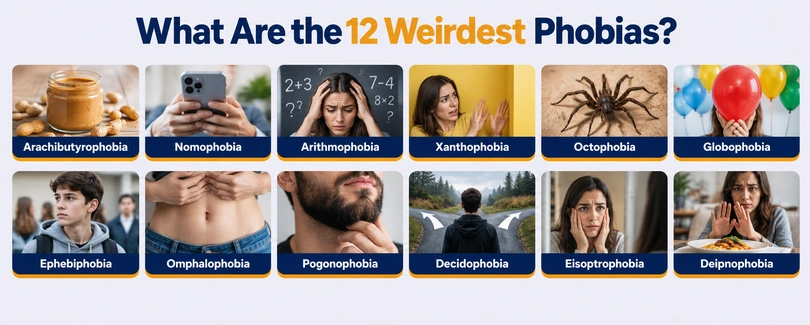
What Are the 12 Weirdest Phobias?
Most individuals have heard about common phobias, which can be fear of heights, fear of water, fear of insects (Entomophobia), or fear of spiders. However, there are some other rare phobias as well that people don’t know about. Some of them are as follows:
1.Arachibutyrophobia
It is the phobia in which people fear peanut butter.They may worry that licking the peanut butter will get it stuck to the roof of their mouth. However, this might have happened to some people once in their life, but people in this state are extremely afraid of this situation. Individuals with this phobia completely avoid eating peanut butter or anything with a similar consistency.
2. Nomophobia (Fear of being without your mobile phone)
Nomophobia is an intense fear of being away from one’s mobile phone. Individuals in this state struggle with excessive anxiety when their battery is low or their phone is out of service.
Whatever the circumstances, if a person is not able to use their phone causes people with nomophobia to panic. Individuals in this state obsessively check their phones again and again, and they remain worried that they might miss any notifications. As per the research, in both genders,58% of men and 47% of women experience Nomophobia
3. Arithmophobia
Phobias can occur in various ways; most of the people grow up dreading math class. However, people with arithmophobia have a real fear of numbers. People experiencing this state usually experience anxiety, which is associated with solving math problems or dealing with numbers in general. This condition can significantly impair an individual’s life, as it causes challenges in doing many tasks.
4. Xanthophobia
It’s a rare condition in which people have a fear of the color yellow. They feel panicked whenever they witness something yellow; it can be any object, such as school buses or yellow flowers. They may avoid the color yellow in every possible way, and it can also make them avoid the food which are in yellow color as they have a very distressing feeling. This condition interferes with everyday life, as the color yellow can be found everywhere.
5. Octophobia
It is a rare kind of phobia in which people have a fear of the number eight. However, there are a few other types of phobias that are specific numbers, such as (arithmophobia) and triskaidekaphobia. People with this state fear the symbol eight as it appears written down, such as in addresses or advertisements, or any object that presents in groups of eight numbers.
6. Globophobia
It is a state in which individuals have a fear of balloons. Every individual has a different experience with this condition. People try to avoid being near balloons to avoid places where they feel like balloons are, such as balloon shops, birthday parties, etc. In some people, the fear is so high that even seeing a balloon on television triggers extreme anxiety. Also, it can occur because of any tragic incident that happened in childhood, such as being startled by a balloon popping.
7. Ephebiphobia
It’s a weird kind of phobia in which people have a fear of adolescents or youth. Individuals may think the attitudes of teenagers are dangerous and believe they are rude. This condition usually develops from the negative news and portrayal of teenagers on social media. This condition is so intense that a person with this condition doesn’t want to be around them. People with this fear may avoid going to another’s place if they have teenagers.
8. Omphalophobia
It is one of the most intense phobias in which people become fearful of belly buttons. They may avoid seeing or touching belly buttons, even their own. Most of the time, to avoid it, they put a bandage over their belly button to avoid looking at it. Moreover, they may also avoid the places where they think they might have to witness it, such as beaches and clubs.
9. Pogonophobia
It’s a condition in which people have an extreme fear of beards. It usually occurs from a tragic incident with a bearded person, such as abuse in childhood by a bearded man, etc. Moreover, it can also occur from a person who doesn’t like that a beard hides someone’s face. So, individuals experiencing this may even have anxiety when looking at a picture of a bearded person or when looking at someone with a beard.
10. Decidophobia
It’s also one of the unusual kinds of phobias in which people have difficulty making decisions. Making any kind of decision can seem impossible for someone with this condition, because they do not trust their own thoughts and opinions. An individual with this condition may rely on others to help them in making decisions. This condition affects mental health and may lead to dependent personality disorder.
11. Eisoptrophobia (Fear of mirrors)
It is a fear of mirrors. People experiencing this type of phobia remain in extreme fear of mirrors, and they are unable to look at themselves in a mirror. This fear may also extend to any reflective surface. This condition usually stems from superstitions, as they feel like something bad might happen, so in order to be safe, they may avoid mirrors or reflective surfaces. Also, the places where they might have to witness mirrors, such as restaurants, salons, etc.
12. Deipnophobia (Fear of dining with others)
Deipnophobia is a fear of dining with others. It usually stems from a fear of dinner conversations or having to carry on a conversation while dining. Most of the time, it may be related to an underlying social phobia. It can also be triggered by traumatic events from a person’s past, such as being insulted as a child for the way they ate or for not following proper etiquette while dining with others.
How do Phobias Develop?
Phobias can occur from a complex interplay of genetics and environmental factors. Means if any close family member has been through this condition, there are chances that you may also develop it. Also, learned responses or developmental influences play a major role in developing phobias. Moreover, cultural and societal factors can also lead to phobias, such as media portrayals, etc.
How Are Rare Phobias Treated?
Specific phobias are highly manageable conditions, whether they’re rare or common. A mental health professional designed a multidisciplinary approach by combining medications with therapies. Some of the common therapies that can help include:
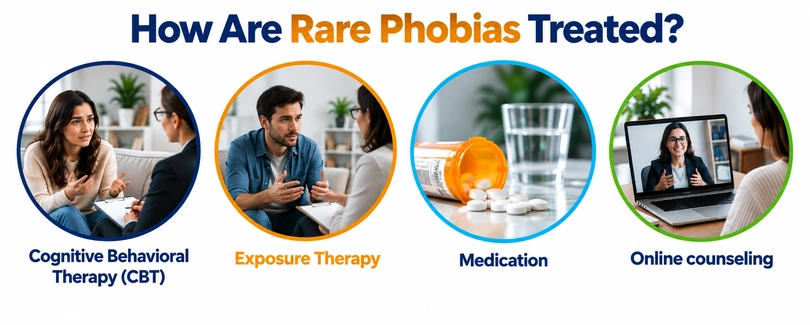
- Cognitive Behavioral Therapy (CBT): it’s an evidence-based therapy that helps by managing negative thought patterns.
- Exposure Therapy: it’s a well-established treatment that includes systematic desensitization.
- Medication: Medications are helpful for managing phobias along with therapies, but they can only be prescribed by a certified mental health professional.
- Online counseling: Virtual counseling can make it easier to get access to licensed mental health support from the comfort of home, depending on a person’s needs, location, and provider availability.
Take the first Step towards Better Well-being at Orange Coast Psychiatry
If you feel like you or any of your loved ones have been struggling with rare or common phobias, seek professional help immediately. You don’t have to suffer alone; we walk beside you in this journey by providing evidence-based treatments in modern ways. You can get access to online counseling, which is HIPAA-compliant, and also get in-person counseling; choose the option that suits you in the best way. We also cover various insurances, so you don’t have to worry about the bills and reimbursements.
Consider speaking with a mental health professional, as we are accepting new patients.
Contact our team now!
Take the Next Step Toward Better Mental Well-being
Living with a phobia can feel isolating, but you do not have to navigate your fears alone. Whether your trigger is common or exceptionally rare, Orange Coast Psychiatry can help you regain control over your life.
Connect with our mental health providers now!