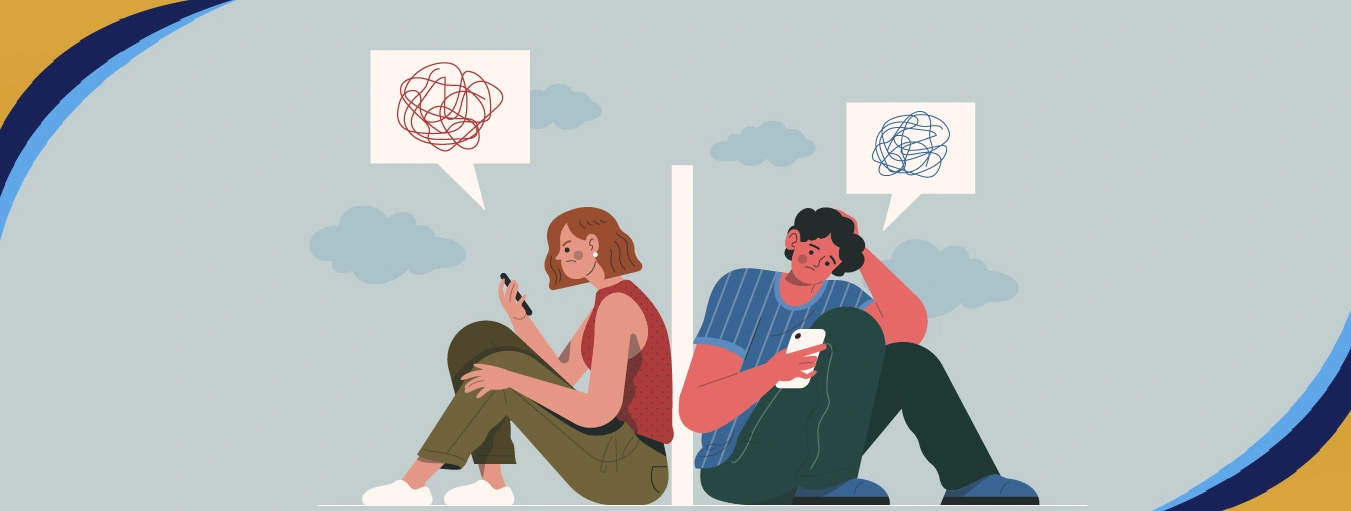
Being emotionally unavailable is when someone looks like present at times but isn’t truly open to a deeper emotional connection. For example, you might share something exciting, and instead of celebrating with you, they glance at their phone or change the subject. Emotionally unavailable people avoid engaging with feelings, both their own and those of others, which makes close connections hard to achieve.
They might avoid deep conversation, be detached from reality, or pull away when things get emotionally intense. It is not that they don’t care; it is that they find it harder to express their feelings in a healthy, clear way.
When someone is emotionally unavailable, they find it hard to engage on a deeper level. They hold back their feelings, resist vulnerability, and keep others at a safe distance. It is not always intentional, rather sometimes people don’t even realize it as their action. But the impact on a relationship can be profound, whether it is a partner, a friend, or even a family member.
What Does Emotional Unavailability Look Like?
Emotionally unavailable meaning shows up in different ways, but most patterns are the same and recur. Here are some clear signs:
Difficulty with intimacy is common. Emotionally unavailable individuals resist closeness and commitment. They might enjoy spending time with others, but when things start to get serious or vulnerable, they step back.
Avoidance of openness is another sign. They avoid deep conversations and change the subject when personal feelings are involved. Instead of sharing, they might deflect with a joke or steer the discussion elsewhere.
Reluctance to take emotional risks is also evident. Being open about feelings means taking risks, and such people avoid them when it comes to emotions. Often, this discomfort stems from past experiences where vulnerability may have led to criticism, rejection, or even punishment. As a result, they protect themselves, even when they want to share more.
Difficulty expressing emotions creates hurdles. Emotionally unavailable people have a hard time expressing what they feel, and sharing with someone else is even harder. When others want to talk about their own feelings, they might look uncomfortable, brush it off, or not know what to say. It is not that they do not care about others’ feelings; they often do not know what to do with feelings, others or their own.
Keeping others at a distance is typical. You might notice a pattern: things are fine until the conversation turns personal. Then they suddenly become distant, aloof, or busy. It is like an invisible wall goes up the moment a real connection becomes possible.
Avoidance of conflict is another aspect. When disagreement arises or emotions run high, emotionally unavailable people tend to disappear, both physically and emotionally. They shut down, walk away, or go silent. The intensity feels overwhelming, so they retreat to protect themselves.
Struggles with empathy are also possible. They might have trouble understanding how others feel. This does not mean they are cold or heartless, but they find it hard to understand what you are going through. They may seem distant when you need support, not because they do not want to help, but because they cannot quite relate to your feelings.

Why Does Someone Become Emotionally Unavailable?
There are many reasons that can make someone emotionally not available. Emotional unavailability often has a cause, like all other mental health disorders. It can come from things that happened in the past or from what you are dealing withtteh situation in the present.
- Past events: Your past can have a big impact. If you have been brought into a house where feelings are not talked about or accepted, you might have learned to keep your emotions to yourself.
- Societal pressure: Maybe you were told not to show your feelings, or you felt it wasn’t safe to open up. And then with the passage of time, you might have started to protect yourself by holding back or not sharing too much,
- Fear of being rejected: Fear can also act as a part in making one a emotionall unavailable. You might fear being rejected, getting hurt again, or feeling overwhelmed by your emotions. If you have been hurt before, it is natural to protect yourself. Sometimes that protection becomes a wall that keeps you out, even from the people you care about.
- Stress: stressful events can make anyone feel less emotionally available. Things like work stress, major changes, health problems, or grief can drain your emotional energy. When you are just going through the day, it can be hard to connect with others. This kind of emotional unavailability is temporary and often gets better once things stabilize.
Early relationships can shape how you connect with others. If people in your life were unpredictable or didn’t show care, you might have learned to keep your distance. You may have started relying mostly on yourself and found it hard to trust others or get close to them.
How Emotional Unavailability Affects Relationships
Relationship struggles can feel overwhelming, even when no one is trying to hurt the other, but both can’t understand each other. You might feel misunderstood or as if something important is missing, even if your intentions are different. You try to connect, but it feels like there is always a barrier in the way. Over time, this can take a real emotional toll, leaving both partners feeling confused, lonely, or even doubting their own worth.
The hidden cost of emotional unavailability is often a deep sense of insecurity that lingers even when the relationship looks fine on the surface.
Emotional closeness does not develop, and the relationship can start to feel shallow. You might spend time together, go through daily routines, or even live in a home, but that closer bond just isn’t there. Without it, things can feel empty or unsatisfying.
Sometimes, a push-and-pull pattern develops. You lean in, they lean out; you reach for closeness, they step away. The more you chase, the more they retreat. This back-and-forth becomes a rhythm of closeness and distance, connection and withdrawal. The harder one person tries, the more the other pulls away. This cycle can leave both people feeling exhausted, and it usually doesn’t change unless both partners work on it together.
Read More About Intellectualization Or Your Mind Controlling Emotions?
Sometimes a push-and-pull pattern develops between the relationships. One person tries to get closer to the other, while the other can push for closeness.
Can Emotional Unavailability Change?
Yes, it can be changed, but it starts with the acknowledgement, like what is going on and why. Often, people don’t realize that they are emotionally unavailable unless someone else realizes them or until they see the same relationship issues piling up and happening again and again.
Talking with a therapist can be helpful. They can look at where these patterns started, what you might be afraid of, and how to establish stronger connections. Different types of therapy can help them with this.
Treatment Options for Emotional Unavailability
If you recognize yourself in any of what we described, or if this resonates with your experiences, here is how we can help. At Orange Coast Psychiatry, we offer several treatment options that can help people work through emotional unavailability. Our providers specialize in conditions like anxiety, depression, and other mental health concerns that often contribute to being emotionally unavailable.
We offer mental health examinations to help identify what may be causing emotional distance. This means we carefully look at your background, previous life experiences, how you are feeling, and anything else that might make it hard for you to connect with others.

Cognitive Behavioral Therapy
Cognitive behavioral therapy can help reduce the patterns of what causes emotional unavailability.
CBT helps them notice unhelpful thoughts (the thought habits that trip you up) and practice being emotionally available when someone talks about their feelings. You can learn simple mechanisms to change these patterns and respond in ways that help you connect with others.
Our talk therapy provides a space to explore your feelings, notice patterns, and try new ways to connect with others. This kind of therapy focuses on your needs and helps you build skills for better relationships.
Medication management serves as another way of our treatment that can help when emotional unavailability is linked to depression, anxiety, or other mental health issues. Our team works with you to find the best treatment plans and check in on your progress over time.
Our services are available both in person and through telepsychiatry, so you can access care in a way that works for you. You can switch between in-person and online sessions as needed, making it easier to stay connected regardless of your schedule or circumstances. We treat patients of all ages, from children to adults, and we personalize every treatment plan to fit your objectives and conditions.
Final thoughts
Emotional unavailability is not only about being distant or needing space; it is a pattern that makes it hard to build close, meaningful relationships. This can leave you and those around you feeling isolated.
Understanding why emotional unavailability occurs is a good place to start. Noticing the signs and symptoms in yourself and others can help you take the next step. With time, proper support, and effort, things can improve. Awareness is the primary step towards building stronger, more connected relationships.
If emotional unavailability is making things harder for you and your relationships, contacting a mental health professional can make a difference. At Orange Coast Psychiatry, we are here to help you as you struggle through these patterns. Our psychiatrists are always available to help.